
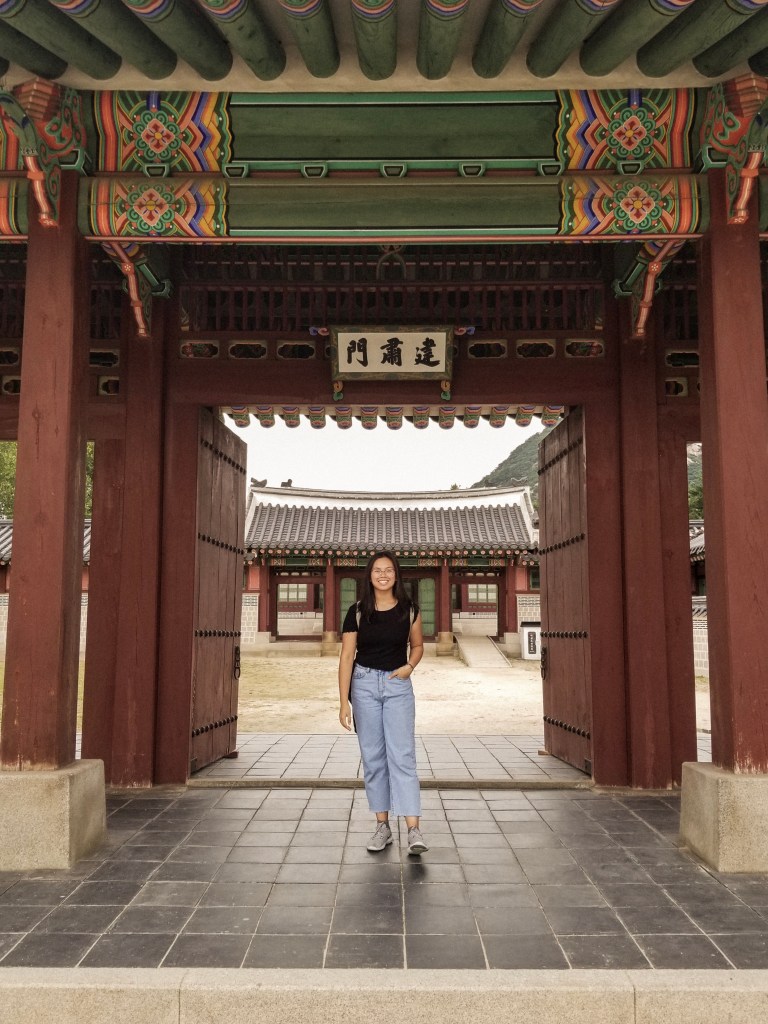
Hello! Last Friday, I had the opportunity to go to Seoul with my Korean Class from Chungnam National University and went around Gyeongbokgung Palace. In Korean the (Gung/last character in Hangul means Palace). This is where the past kings and their wives, and servants lived.
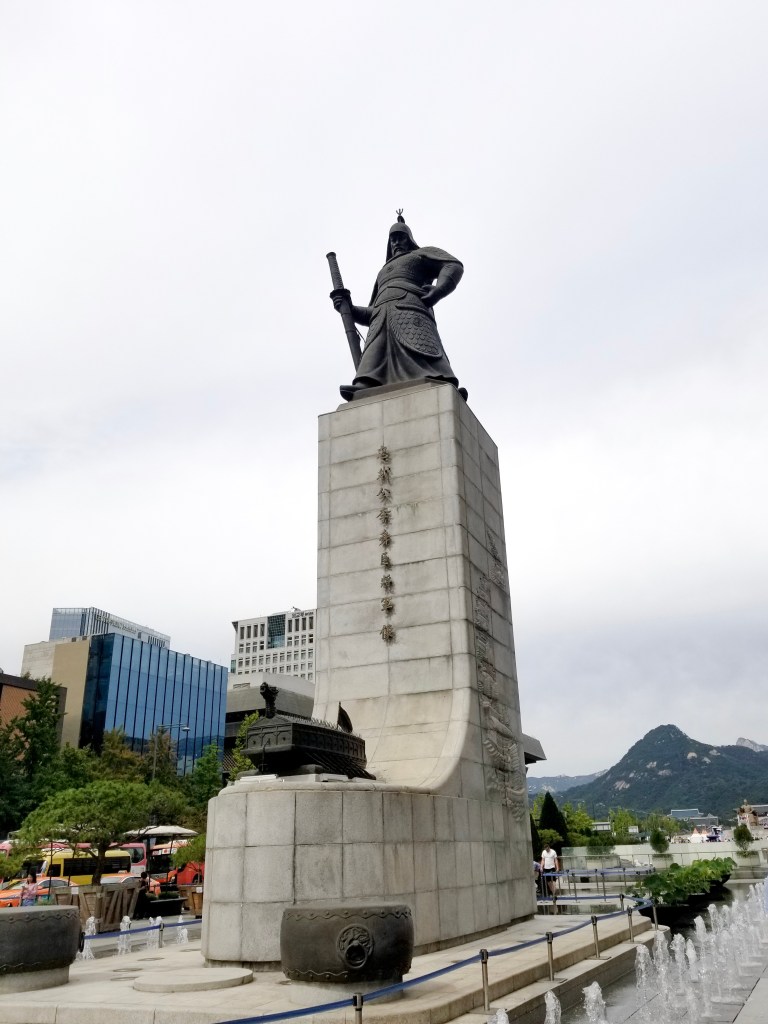
However, before walking into the palace itself, there were two grand statues of two very important figures in Korean history. The first statue of Admiral Yi who headed the Korean army against the Japanese. Admiral Yi is considered a BOSS because he won a naval battle against Japan with only 13 warships whereas Japan had hundreds.
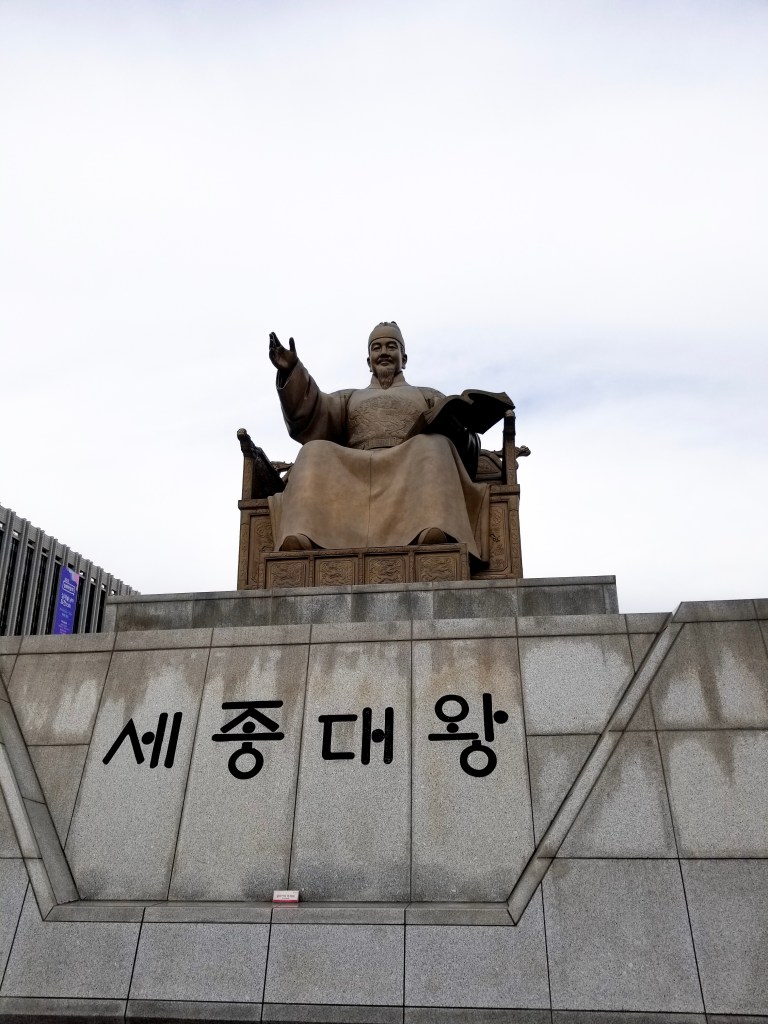
The next person status that you see is of King Sejong who created the Korean language that we know today. The Korean language orginates from Chinese, but King Sejong thought it can be simplified and he did just that.
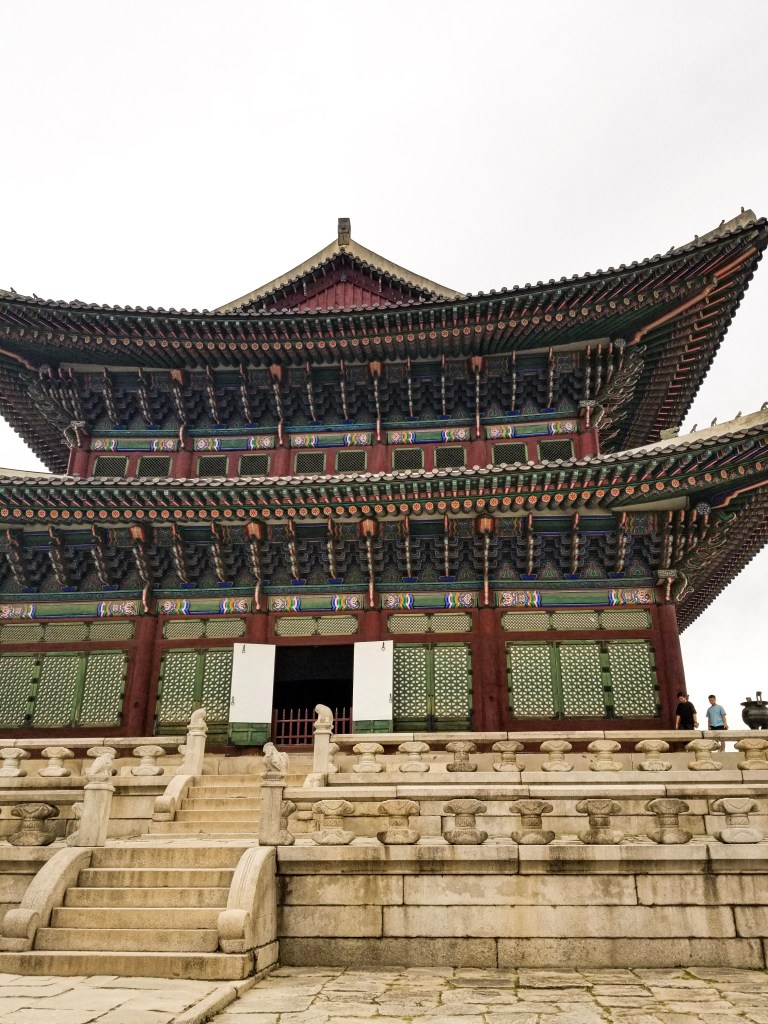
The palace was huge, which is expected as it is the King’s crib. The details on the tiles and the windows were great to look it. The details were so intricate and the colors just popped.
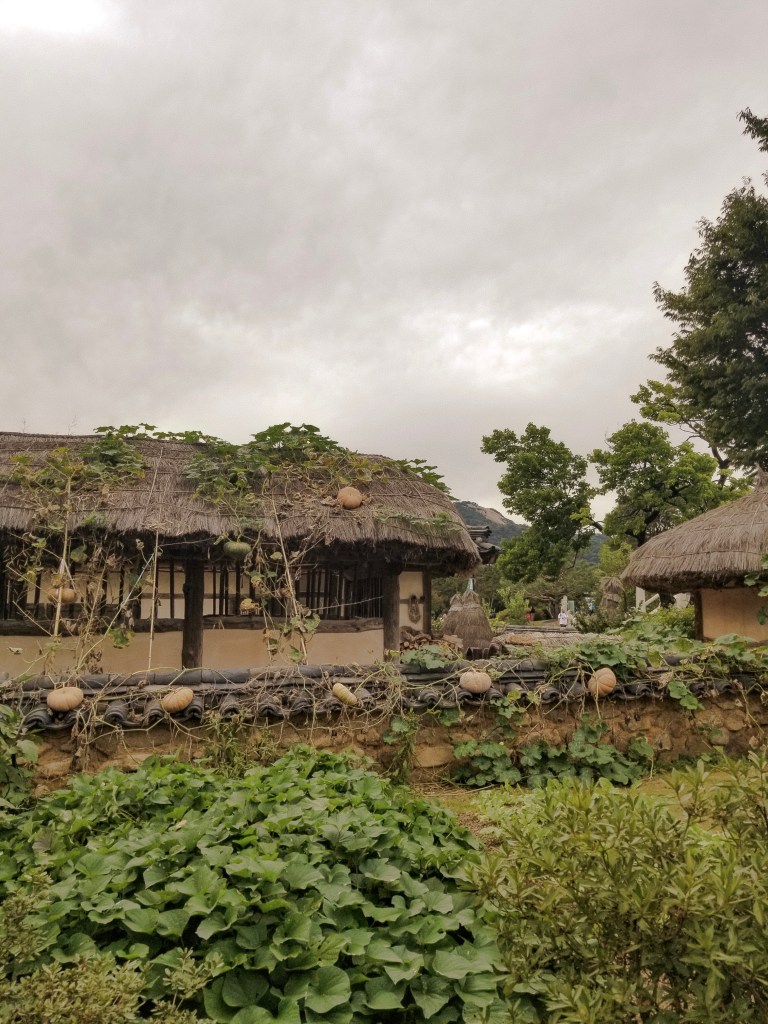
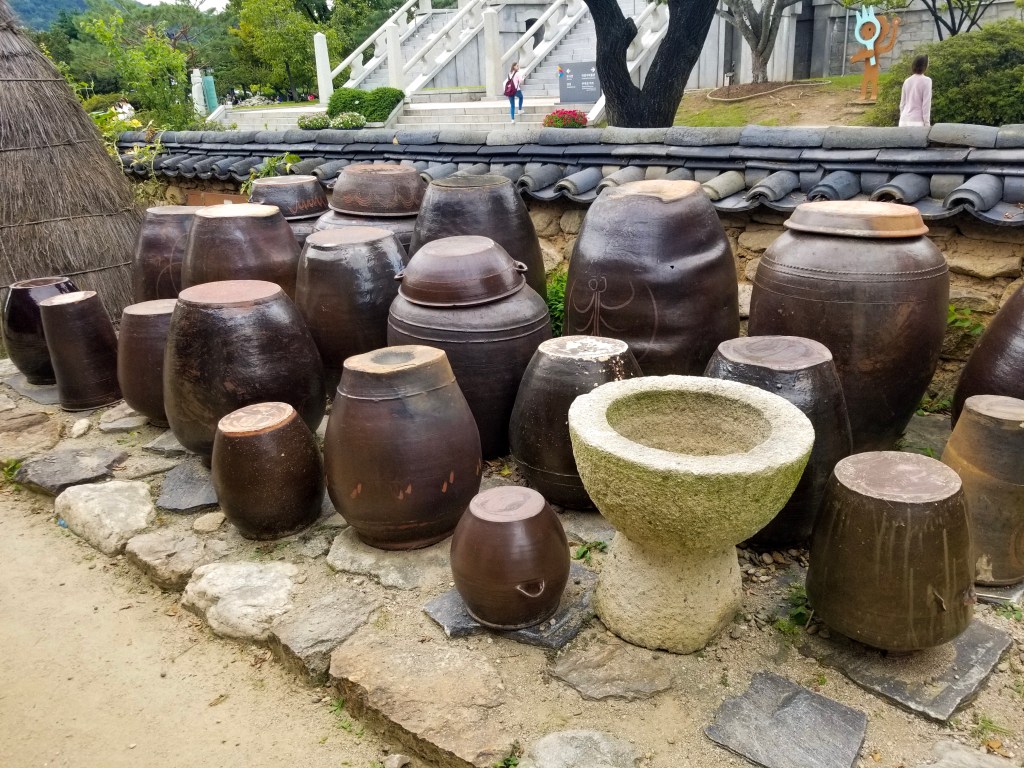
After walking around the palace, I was captivated by the middle class home. It was a short house with dried straw as its roof and it had lots of vegetation around it and even on it. The back of the house had clay pots of different sizes. I believe these were previously used for fermentation of different veggies and foods so that they did not go bad.
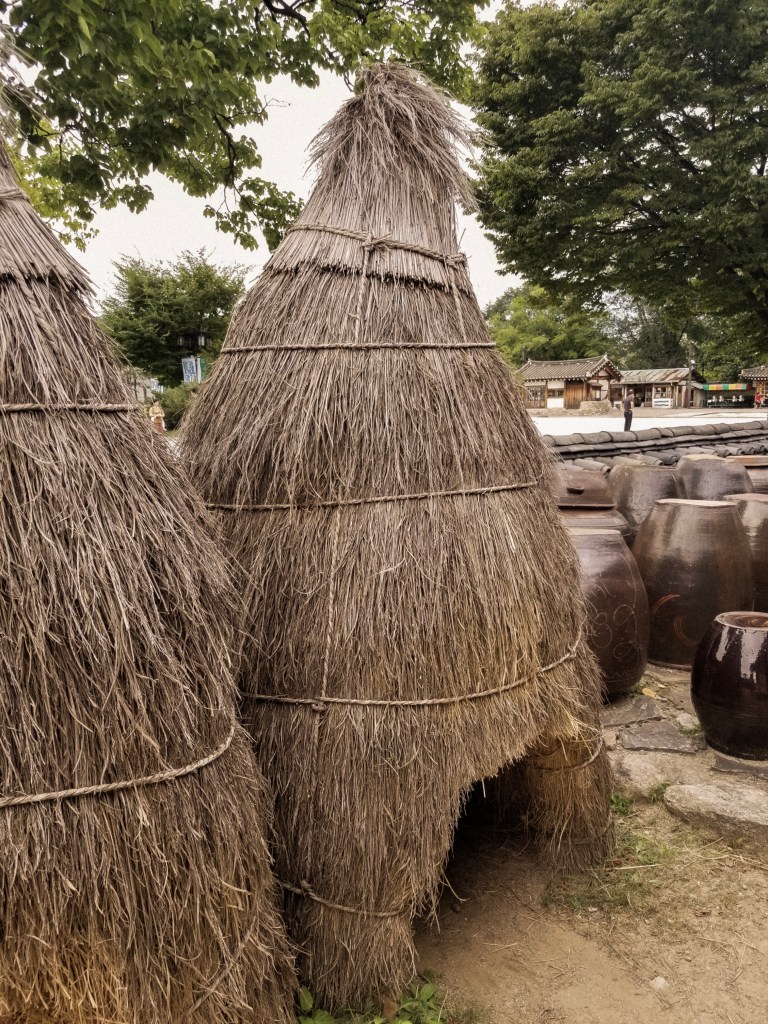
Then I saw this grass hut and thought it was very peculiar because I don’t think people had dogs back then to build a house for. My professor told me that it was for the kimchi. Kimchi fermented in cooler temperatures were tastier than if it was exposed. So these little huts were kimchi houses, not dog houses.
The palace was a fun place to visit, but I did wish that we got someone that had provided us with more information about the palace, who did what, and the overall history of the place. Either way, it was fun to explore. . I was tired after walking around and I could only imagine how tired the servants were as well.
 follow me on my travels~